News compilation on A Socialist In Canada, Dec 8, 2017
Introduction by Roger Annis:

Five wildfires are raging in and around Los Angeles in southern California since December 4. A sixth fire erupted in San Diego on December 7. The largest of the fires is the ‘Thomas Fire’, in Ventura County across the northern perimeter of greater Los Angeles.
Some 158,00 acres (64,000 hectares) have burned to date. More than 200,000 people have been evacuated from their homes. There is no sign of relief in weather forecasts. These call for continued extreme winds and dry conditions. Current fire status is here, by California Department of Forestry and Fire Protection (Cal Fire).
Enclosed are news reports on the scale of the disaster plus reports explaining how urban sprawl, rising average global temperatures, related disruptions to weather patterns, and decades-old forest fire suppression practices have spawned or fueled the conflagrations.
Already in October, more than 40 people were killed and at least 10,000 homes lost when wildfires tore through Sonoma and Napa Counties in central California. According to Cal Fire, in all of 2017 to date, 8,756 fires have burned a total of 1.15 million acres (475,000 hectares) in rain-starved California. That’s nearly half the area that burned in this year’s record wildfire season in British Columbia, Canada. (For reports of the October 2017 fires in California, see LA Times, Oct 10, 2017 and NBC News, Oct 10, 2017.)
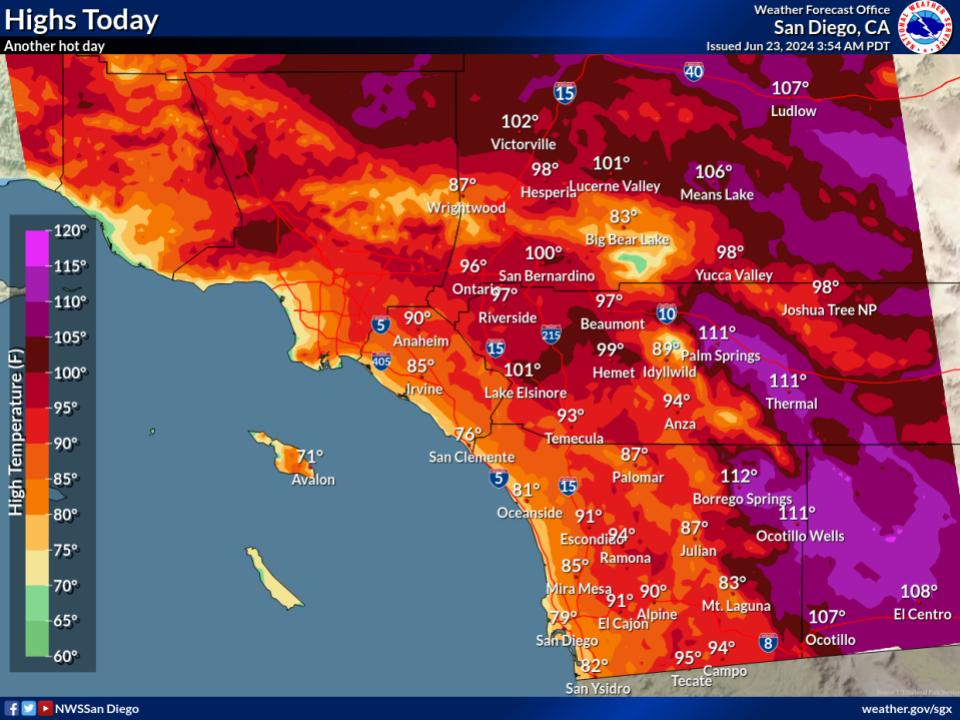
Speaking of Canada, here is a chart of Alberta’s weather forecast for the next week. Average temperatures on these dates are high -1C (30F), low -13 (9F).]
 And see: Record warmth blankets Alberta, RobertScribbler, Dec 12, 2017
California fires: Why is everything burning?
By The Desert Sun (USA Today network), Dec 7, 2017
PALM SPRINGS, Calif. — Call it the perfect firestorm. The massive wildfires destroying communities over huge swaths of Southern California are being fueled by a dangerous combination of heat, overgrown foliage, suburban sprawl and winds so terrible that early California settlers originally named them after the devil himself — Satana, which gave way to the less menacing term, the Santa Anas.

At the heart of this unprecedented confluence of climatology and ecology is California’s ballooning population in search of affordable housing. The West Coast quest for single family, wood-frame homes has pushed development into the divide between urban areas and historically open brush land — much of it hilly, highly flammable chaparral.
Modern fire suppression efforts have guaranteed that the new construction is occurring in shrubby, forested areas that have not burned in generations. Given that the California chaparral has evolved to tolerate regular fires, that means what is essentially tinder has accumulated for decades.
Add to that last winter’s record rains, which nourished an explosion of plant growth. That lush new vegetation dried in last summer’s record temperatures and further withered over a bone-dry rainy season that should have begun more than two months ago — but didn’t.
In other words, much of Southern California is sitting atop or surrounded by a mountain of combustible fuel simply waiting for a spark.
When that spark came to areas across the region, weather conditions couldn’t have been worse: Multiple high-pressure systems have settled across the American West, forcing moisture-bearing Pacific storms to the north and bringing unusually dry weather from Seattle south to San Diego.
Those high pressure systems, in turn, create low humidity levels and funnel high winds — some of hurricane velocity — from the inland deserts to the sea. There is no rain in the forecast for the foreseeable future and meteorologists predict the winds will continue into next week.
When a fire breaks out in the tinder-dry brush or grasses, high winds can spread embers and burn vegetation with terrifying speed in landscape where humidity has sunk into single digits. At the moment, Southern California — with its sprawling subdivisions, miles of dried vegetation, and hot weather — is at the mercy of the ruthless wind.
Related news:
* More than 400 structures destroyed in 115,000-acre Ventura County wildfire, LA Times, Dec 7, 2017
Heavy toll of horses killed by California fires, LA Times, Dec 9, 2017
* ‘It burns and it keeps burning’: Scenes from southern California’s wildfires, by Jennifer Medina and Jack Healy, New York Times, Thursday, Dec 7, 2017
… On Thursday, the hot, dry winds sparked new fires in San Diego and Riverside Counties and up the coast. Nearly 200,000 people were forced to evacuate, and residents in areas already charred by wildfire worried that the strengthening, erratic winds could ignite new fires at any moment.
Fire and smoke forced intermittent closures of the 101 freeway — the main coastal route north from Los Angeles — between Ventura and Santa Barbara, along with several secondary highways and smaller roads. On Wednesday, it had been portions of the 405 freeway closed, which sent long lines of traffic onto surface streets…
* In a warming California, a future of more fire, by Henry Fountain, New York Times, Dec 7, 2017
* The combustible mix behind Southern California’s terrifying wildfires, by Andrew Freedman, published on Mashable, Dec 7, 2017
* Why is southern California burning in December? A climate scientist’s answer, by Joseph Serna, LA Times, Dec 7, 2017
‘Southern California may get the Santa Ana winds every year, but — according to recorded history — they’ve never been like this. With relative humidities in the single digits along the coastal mountains, where a series of fires has scorched thousands of acres and destroyed more than 100 homes, the air is the driest it’s been here in recorded history, said UCLA climate scientist Daniel Swain.’
Rise of the fimbul fires: Climate change enhanced jets of flame rage across southern California
By Robert Haney, published on his blog RobertScribbler, Dec 7, 2017
Fimbul is an old Icelandic word for mighty, giant, great. It is an archaic word that has fallen out of modern use. But considering the fact that the fires now ripping through Southern California are both out of the context of recent milder climates and have explosively expanded to gigantic proportion, it is perhaps time that we should re-introduce the term.

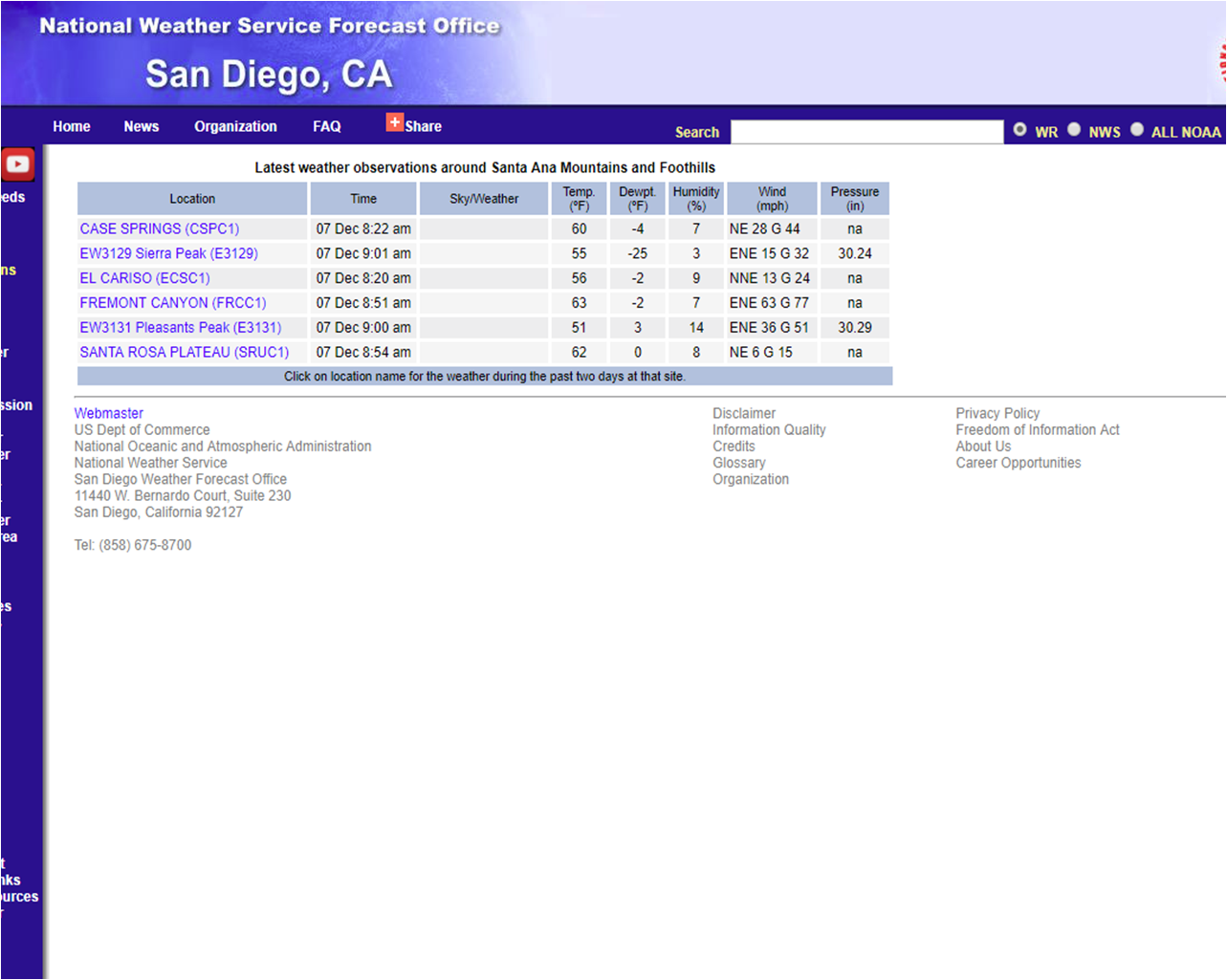
Sections of Southern California are now experiencing never-before-seen levels of fire hazard as winds gusting to near 80 mph across the region are fanning five out of control blazes. The fires are burning during what should be the cooler month of December. But cool conditions have eluded that part of the state. And the blow-torch like Santa Ana winds that are fanning the flames are being enhanced by conditions consistent with human-caused climate change.
Today, the fire index for Southern California is 296. The threshold for an extreme fire index is 165. And 296 is the highest fire index So Cal has ever experienced according to local firefighters. Fire index is a measure of fire risk. So, if these reports are correct, this region has never seen fire danger hit such an extreme intensity.
Five fires now burning across Southern California have consumed upwards of 120,000 acres — or a region larger than Atlanta. The Thomas Fire in Ventura County is the largest at approximately 96,000 acres. The Rye Fire, Creek Fire, and Skirball fire all continue to burn. And a new fire — the Horizon Fire in Malibu — has recently ignited. None of these fires are more than 15 percent contained. So all are effectively still out of control.
In total, approximately 20,000 buildings are threatened by fire with more than 300 homes and businesses burned already. 200,000 people are under evacuation orders — enough to fill a relatively large city. Thankfully, there have been no reports of loss of human life so far. But animals, including these horses, haven’t been so lucky.
Climate change skeptics and deniers will try to say that such events are normal for California. That fires always happen. That weather is variable. And tell you five or six or seven other kinds of hogwash.
But the fact is that these conditions are not normal. That California has just experienced its worst fire year on record. That the incidence of large fires in the West has risen fourfold since the mid 1980s. And that report after report after report are linking presently worsening fire conditions in the region to climate change.
Other politically motivated individuals will tell you that now is not the time to discuss climate change — by stating that responding to the disaster itself is more important that examining causes. This is also a red herring — as any effective disaster response will include a responsible review of causes.
To this point, if we are to be effective in both responding to this disaster and in reducing future harm, we should look seriously at the underlying causes that are making fires in places like California worse. And if we are exploring why these Fimbul Fires are happening now, then the big issue is climate change — writ large.
Also on RobertScribbler:
Winter is supposedly coming; So why is California burning?, Dec 6, 2017
As forecasters expect a warming climate will make Santa Ana winds more frequent and faster, that Santa Ana blowtorch is likely to do a lot more damage to the developed parts of the state.
Further related analysis:
* California will burn until it rains — and climate change may keep future rains away, by Rachel Becker, The Verge, Dec 6, 2017
* Insurance claims from Oct 2017 wildfires in northern California rise to $9 billion, SF Gate, Dec 6, 2017
The Oct 2017 blazes destroyed more than 5,000 homes and nearly 1,000 businesses across six counties, according to state Insurance Commissioner Dave Jones’s office. Thousands more were damaged, as were other buildings, barns and cars, resulting in 25,979 total claims…
* Climate change already costs us all money, and it’s going to get worse, by John Timmer, ARS Technica, Dec 6, 2017
Columbia University’s Earth Institute hosted a panel on December 5 that was meant to focus on an issue we’re likely to be facing with increasing frequency: the need to move entire communities that are no longer viable due to rising seas or altered weather. But the discussion ended up shifting to how people in at-risk locations aren’t moving, and the entire governmental structure in the U.S. is focused on keeping them right where they are. As a result, the entire U.S. population is already paying for climate change…